Bradshaw Gates • Fence & Gate Advice
November 5Miller Fence Alternatives: Vinyl, Metal, Composite and More
Quick Summary
The main fence alternatives to Miller Fence's wood and metal panels are vinyl, metal, composite and chain-link, each trading wood's upkeep for different trade-offs. The right choice depends on whether you need privacy, security, containment or low maintenance, and on local wind, moisture and soil conditions.
- Wood needs cleaning, sealing or staining every few years and can split or lean after wet seasons.
- Vinyl needs no painting or staining but can crack in extreme cold and costs more up front.
- Chain-link is the lowest-cost option for containment and boundary lines but offers little privacy.
- Decide what the fence must do first: block a view, contain a pet, mark a boundary or secure an entry.
- Compare installer quotes line by line, since low bids often omit removal, post depth or gate hardware.
Table of Contents
- What Searchers Mean by a Miller Fence Alternative
- Wood Fence Alternatives and Why Homeowners Switch
- Vinyl Fence vs Wood Fence: Cost, Upkeep and Appearance
- How Long a Vinyl Fence Lasts and What Shortens Its Life
- Metal, Composite and Chain-Link Options by Site and Climate
- Wind exposure
- Moisture and humidity
- Heat, cold, and freeze-thaw
- Soil and slope
- Matching material to use
- Fence Installation Cost and Total Cost of Ownership
- What drives an installed fence quote
- Total cost of ownership by material
- The planning costs nobody quotes
- Choosing Your Next Fence and Requesting a Quote from Bradshaw Gates
- Frequently Asked Questions
What Searchers Mean by a Miller Fence Alternative
A search for "miller fence alternative" usually comes from one of three places. Some people want a different fence material than the wood or metal panels Miller Fence installs. Others are comparing installers and want a different contractor. A third group wants a lower price for the same job.
Most of the time, the real question is material. Wood is the most common choice for privacy, yet it warps, rots and needs regular staining. Vinyl, metal and composite options each trade those problems for different ones.
Wood Fence Alternatives and Why Homeowners Switch
Many homeowners move away from wood because of upkeep. A wood fence typically needs cleaning, sealing or staining every few years, and sections can split or lean after a wet season.
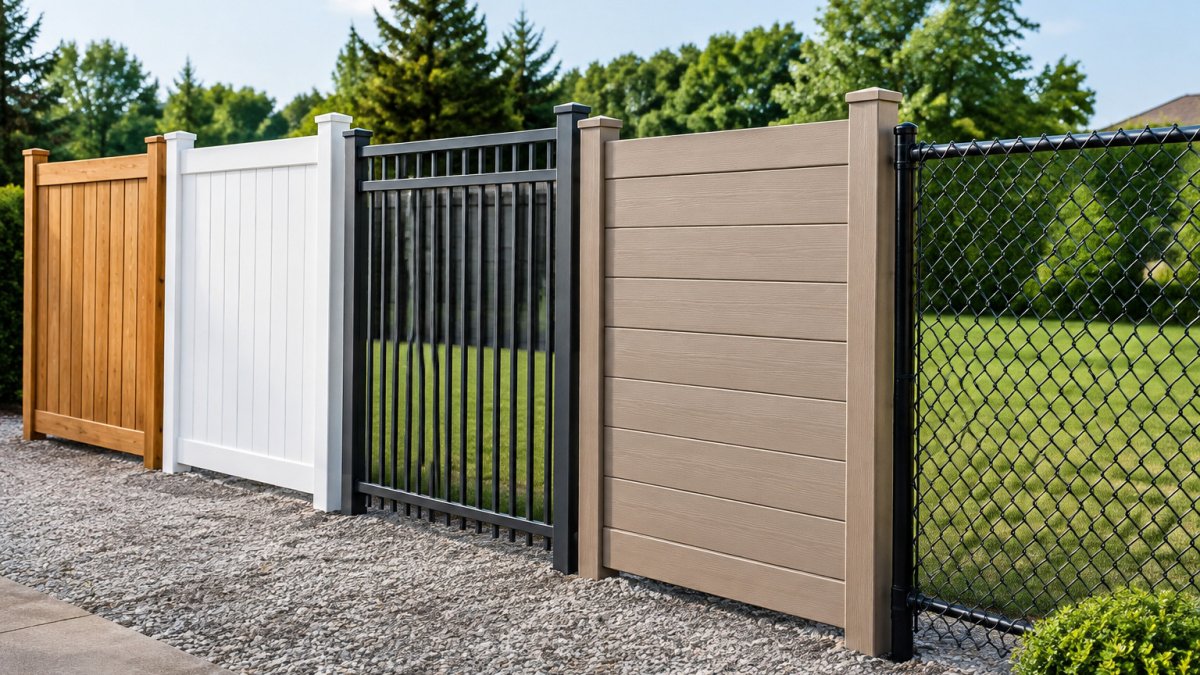
The main alternatives are:
- Vinyl: Low upkeep and a clean look, with no painting required.
- Metal (aluminum or steel): Strong and open, suited to views and security.
- Composite: Wood-like appearance with less rot risk.
- Chain-link: The lowest-cost option for containment and boundary lines.
Each has a trade-off. Vinyl can crack in extreme cold and cost more up front. Metal can rust if the coating is damaged. Chain-link offers little privacy. Pick the material that fits the job, not the one that looks best in a showroom.
Vinyl Fence vs Wood Fence: Cost, Upkeep and Appearance
Vinyl is a common wood replacement. Its main advantage is that it does not need painting, staining or sealing.
Homeowner and contractor standing by a new white vinyl privacy fence, one of many durable fence alternatives.Wood has a natural look that many buyers prefer, and it is easier to repair with basic tools. A single damaged board can often be replaced in an afternoon. Vinyl panels are harder to patch, so a damaged section may need a full panel swap.
Pricing depends on quantity, dates and delivery, along with height, length, style and site conditions. Request a written quote from Bradshaw Gates that itemizes materials, posts, removal of the old fence and any gate hardware.
How Long a Vinyl Fence Lasts and What Shortens Its Life
A well-installed vinyl fence can last for many years, but several factors shorten that. Poorly set posts that shift under soil movement cause panels to crack at the joints. Heavy impact from mowers, vehicles or falling branches can crack the material. Sun and temperature swings affect long-term color and flexibility in some products.
Proper post depth, concrete footings sized for wind load, and correct panel alignment do more to extend life than the brand name on the rail. Ask any installer how they set posts and how they handle sloped ground.
Metal, Composite and Chain-Link Options by Site and Climate
Material choice should follow the site, not the showroom. The same fence that performs for decades on one lot can fail in a few seasons on another because of wind, moisture, soil, and slope. Here is how each option behaves under the conditions that actually shorten fence life.
Wind exposure
A solid privacy fence acts like a sail. In open, windy areas, the wind load on a 6-foot solid panel is far higher than on an open-picket or chain-link fence, and that load transfers directly to the posts and footings. Metal and open-picket designs shed wind, which is why they are common along exposed ridgelines and coastal lots. If privacy is the priority in a windy area, plan on deeper footings, larger posts, and closer post spacing rather than a standard installation.
Moisture and humidity
Wood is the material most vulnerable to rot, especially where posts meet soil and where boards stay damp. Vinyl and composite resist rot, and galvanized or coated steel resists rust as long as the coating stays intact. In humid climates, the weak point shifts from the panel to the fasteners and post bases; stainless or coated hardware lasts longer than bare steel.
Heat, cold, and freeze-thaw
Vinyl expands and contracts with temperature, so panels need room to move at the joints; installers who jam panels tight invite cracking. In cold climates, frost heave can lift posts that were set too shallow, which is why footing depth should be sized to the local frost line. Composite behaves similarly to vinyl in temperature swings. Metal moves less but can telegraph dents and coating damage.
Soil and slope
Sandy or loose soil holds posts poorly and calls for deeper footings or concrete collars. Clay that swells and shrinks with moisture can shift posts seasonally. On slopes, the choice is between stepped panels (each section level, following the grade in steps) and racked panels (rails angled to follow the grade). Stepped runs look cleaner on steep ground; racked runs suit gentle grades. Gate alignment is the first thing to suffer on a sloped lot, so plan gate posts carefully.
Get a Quote →
Matching material to use
- Privacy from neighbors or a road: solid vinyl, composite, or wood panels, with wind and footing planned for.
- Security and visibility: aluminum or steel with open pickets; harder to climb than chain-link and keeps sightlines open.
- Pet or livestock containment: chain-link or welded wire is the most practical and the easiest to repair.
- Coastal or high-wind exposure: open metal designs and corrosion-resistant coatings outperform solid panels.
- Long-term low upkeep: vinyl or composite, accepting a higher up-front cost.
Watch out: a fence that fails on your lot costs more than one that was specified correctly for it. Ask any installer how they size footings for wind and frost, and how they handle slope, before you compare materials on price alone.
Fence Installation Cost and Total Cost of Ownership
Most fence articles stop at the sticker price. The useful comparison is what the fence costs you from the day it goes in to the day it comes out. That means installation, routine upkeep, repairs, and the expected replacement date, added together over a realistic ownership window of 15 to 20 years.
What drives an installed fence quote
Installed price is not a single number per linear foot. It is the sum of several line items, and two quotes for the same run of fence can differ by thousands of dollars because of how each one handles these:
- Linear feet and height. Price scales with both. A 6-foot privacy run costs more per foot than a 4-foot boundary run because of taller panels, deeper posts, and more material.
- Post setting. Posts set in concrete to a depth sized for local frost lines and wind load cost more than posts driven or set in gravel, but they are the single biggest factor in whether panels stay aligned.
- Removal and disposal. Tearing out an existing wood or chain-link fence, hauling it away, and patching the ground is a real line item that budget quotes often omit.
- Gates. A walk gate is a modest add; a double drive gate or an automatic opener can rival the cost of a long run of fence on its own.
- Site conditions. Slopes, rock, roots, and tight lot lines slow installation and require stepped or racked panels rather than standard straight runs.
- Permits and inspections. Many jurisdictions require a fence permit, and some require a survey or plot-plan check before approval.
A common pattern is that the lowest bid is low because it leaves out removal, uses shallower post footings, or excludes gate hardware. Compare quotes line by line, not by the bottom number.
Total cost of ownership by material
The purchase price is only the first cost. The table below compares the ongoing costs that separate a cheap fence from an economical one.
| Cost factor | Wood | Vinyl | Aluminum / steel | Chain-link | Composite |
|---|---|---|---|---|---|
| Typical installed range (per linear foot, 6 ft) | $25-$50 | $30-$60 | $35-$70 | $15-$30 | $40-$75 |
| Routine maintenance | Clean, seal or stain every 2-4 years | Hose and mild soap | Touch up coating as needed | Minimal | Occasional wash |
| Typical repair | Replace individual boards | Replace full panel or section | Replace picket or panel | Replace fabric or post | Replace board or panel |
| Expected service life | 10-20 years with upkeep | 20-30+ years | 20-40+ years | 15-25 years | 20-30 years |
| Main failure mode | Rot, warping, splitting | Cracking at joints, impact | Coating damage, rust | Sagging fabric, rust | Fading, impact |
Run the math over the full ownership period.
Watch out: a quote that is dramatically lower than the others usually reflects a missing line item, not a better deal. Ask each bidder to itemize removal, post depth, gate hardware, and permit responsibility before you compare totals.
The planning costs nobody quotes
Permits, property-line verification, and HOA approval can add both cost and weeks to a project. Before work begins:
- Check your property line. A survey or a review of your plat is cheaper than moving a fence built in the wrong place.
- Confirm permit requirements. Many municipalities require a fence permit and an inspection, and some cap height or set setback rules.
- Read your HOA covenants. Architectural review boards often restrict height, material, color, and fence style, and approval can take weeks.
- Call 811 before you dig (811 Before You Dig). Utility locating is free and prevents costly damage to buried lines during post setting.
These steps do not change the fence itself, but they change the total project cost and timeline more than most homeowners expect.
Choosing Your Next Fence and Requesting a Quote from Bradshaw Gates
Start with the job the fence must do, then match the material to the site. Bradshaw Gates builds and installs wood, steel, vinyl and chain-link fencing, and fabricates custom steel gates. We focus on solid posts, careful alignment and quality control. We also handle difficult terrain and unusual jobs.
We also diagnose and repair automatic gate openers, which is often the fastest way to restore reliable access if your current system keeps failing.
To get pricing for your property, Get a Quote from Bradshaw Gates.
Frequently Asked Questions
What are the best alternatives to a wood fence?
The most common alternatives are vinyl, aluminum, steel, composite and chain-link. Vinyl and composite suit homeowners who want privacy with little upkeep, since neither needs staining or painting. Aluminum and steel work well for decorative or security fencing, while chain-link is the least expensive option for containment. The right choice depends on how much privacy you need, your budget, and how much maintenance you are willing to do each year. Ask any contractor, including Bradshaw Gates, to walk the site with you before you commit.
Which type of fence lasts the longest?
Steel and aluminum fences generally last the longest when properly coated, often decades, while vinyl commonly lasts 20 to 30 years with proper installation. Wood typically lasts 10 to 15 years depending on species, treatment and climate. Chain-link can also last many years if the galvanizing stays intact. Lifespan depends heavily on installation quality, post depth and local weather, so a well-built fence of a slightly less durable material can outlast a poorly installed one.
How long does a vinyl fence last?
A quality vinyl fence can last many years with proper installation. Lifespan is shortened by poor post setting, fences installed in areas with heavy winds or strong sun exposure that causes fading and brittleness over time, and impacts from vehicles or yard equipment. Choosing thicker, UV-stabilized vinyl and ensuring posts are set in concrete at the proper depth both extend service life. Pricing and specifications vary by product, so request current details directly from Bradshaw Gates when you get a quote.
Is vinyl fencing better than wood fencing?
Vinyl is usually better if you want low maintenance and consistent appearance, because it does not rot, warp or require regular staining. Wood is often better if you want a natural look, the ability to repair individual boards, or a lower upfront cost. Vinyl generally costs more to install than basic wood, but it can cost less over its life because it avoids recurring stain and repair expenses. Compare the two on total cost of ownership rather than sticker price alone.
Get a Quote Add bradshawgates.com as a preferred source on Google →Frequently Asked Questions
What are the best alternatives to a wood fence?
The most common alternatives are vinyl, aluminum, steel, composite and chain-link. Vinyl and composite suit homeowners who want privacy with little upkeep, since neither needs staining or painting. Aluminum and steel work well for decorative or security fencing, while chain-link is the least expensive option for containment. The right choice depends on how much privacy you need, your budget, and how much maintenance you are willing to do each year. Ask any contractor, including Bradshaw Gates, to walk the site with you before you commit.
Which type of fence lasts the longest?
Steel and aluminum fences generally last the longest when properly coated, often decades, while vinyl commonly lasts 20 to 30 years with proper installation. Wood typically lasts 10 to 15 years depending on species, treatment and climate. Chain-link can also last many years if the galvanizing stays intact. Lifespan depends heavily on installation quality, post depth and local weather, so a well-built fence of a slightly less durable material can outlast a poorly installed one.
How long does a vinyl fence last?
A quality vinyl fence can last many years with proper installation. Lifespan is shortened by poor post setting, fences installed in areas with heavy winds or strong sun exposure that causes fading and brittleness over time, and impacts from vehicles or yard equipment. Choosing thicker, UV-stabilized vinyl and ensuring posts are set in concrete at the proper depth both extend service life. Pricing and specifications vary by product, so request current details directly from Bradshaw Gates when you get a quote.
Is vinyl fencing better than wood fencing?
Vinyl is usually better if you want low maintenance and consistent appearance, because it does not rot, warp or require regular staining. Wood is often better if you want a natural look, the ability to repair individual boards, or a lower upfront cost. Vinyl generally costs more to install than basic wood, but it can cost less over its life because it avoids recurring stain and repair expenses. Compare the two on total cost of ownership rather than sticker price alone.
Planning a fence or gate project?
Bradshaw Gates serves Northeast Oklahoma and the Four-State area.
Request a Quote Call 918-325-0057