
Bradshaw Gates • Fence & Gate Advice
October 315 Security Fence Installation Steps for Commercial Property
Last Updated: October 31, 2026
Quick Summary
Security fence installation for commercial property follows five stages: site survey and utility locate, design and material selection, permitting and scheduling, post setting and construction, and a final walkthrough. The material should follow the threat profile, not the other way around, so define what the fence must stop before choosing chain-link, steel, vinyl, or wood.
- Chain-link suits large perimeters and storage yards with moderate security and low upkeep.
- Steel and ornamental fencing offers high security and is best for frontage and high-value sites.
- Posts go in first, set to depth and plumb, because every panel depends on them.
- Commercial fence cost depends on linear footage, material, terrain, and gate complexity.
- Buying an opener before the gate is designed is a common and expensive mistake.
Table of Contents
- Commercial Security Fence Types: Matching the Threat to the Material
- Chain-Link: The Cost-Effective Workhorse
- Steel and Ornamental: Deterrence You Can See
- Vinyl and Wood: When Privacy Outranks Deterrence
- The Commercial Fence Installation Process: From Site Survey to Final Walkthrough
- Commercial Fence Installation Cost: What Moves the Number
- Security Fence With Gate: Where Access Control Lives
- Vetting Your Security Fence Installation Contractor
- Request a Commercial Fence Quote From Bradshaw Gates
- Frequently Asked Questions
Commercial Security Fence Types: Matching the Threat to the Material
Security fence installation for commercial property starts with one decision most buyers get backwards: choosing the material before defining what the fence must stop. A fence that keeps honest people out of a storage yard is not the same fence that protects inventory from a determined intruder with tools and time. The material should follow the threat, not the other way around.
Security fence installation is the process of selecting, planning, and building a perimeter barrier with gate and access control systems sized to a property's actual risk profile. The work includes site survey, material selection, post setting, alignment, and hardware integration.
Below, we break down the three material families we install most often and what each one does well.
Chain-Link: The Cost-Effective Workhorse
Chain-link is a common choice for commercial perimeters. It deters casual trespass, defines property lines, and pairs easily with barbed wire or privacy slats where you need more.
The weakness is visibility. Chain-link shows an intruder exactly what is behind it, so it suits yards, equipment storage, and utility compounds better than high-value inventory.
Steel and Ornamental: Deterrence You Can See
Steel and ornamental fencing signals that a property is protected before anyone touches it. Tall pickets, welded panels, and spear-top designs raise the effort required to climb, and steel holds its shape for decades with minimal upkeep.
This is the right choice for customer-facing commercial frontage, where curb appeal matters as much as security. Custom fabrication can be used to match odd angles and slope changes.
Vinyl and Wood: When Privacy Outranks Deterrence
Vinyl and wood fencing block sightlines, which matters for screening, noise reduction, and privacy between neighboring businesses. Neither material stops a determined intruder on its own, so we recommend pairing privacy fencing with lighting, cameras, or an access-controlled gate.
A common mistake is choosing privacy fencing for a security problem. Privacy and deterrence are different jobs, and the best commercial perimeters often use both materials on different sides of the property.
| Material | Best For | Security Level | Upkeep |
|---|---|---|---|
| Chain-link | Large perimeters, storage yards | Moderate | Low |
| Steel/ornamental | Frontage, high-value sites | High | Low |
| Vinyl | Screening, noise, privacy | Low to moderate | Low |
| Wood | Privacy, residential-adjacent sites | Low to moderate | Moderate |
The Commercial Fence Installation Process: From Site Survey to Final Walkthrough
Every reliable commercial fence installation process follows the same five stages, and skipping any one of them is how fences end up leaning, gapping, or failing within a few years.
- Site survey and utility locate. We walk the property line, note grade changes, and confirm utility locations before anyone digs.
- Design and material selection. Threat profile, budget, and local code requirements decide the material and height.
- Permitting and scheduling. Commercial projects often need permits and inspections.
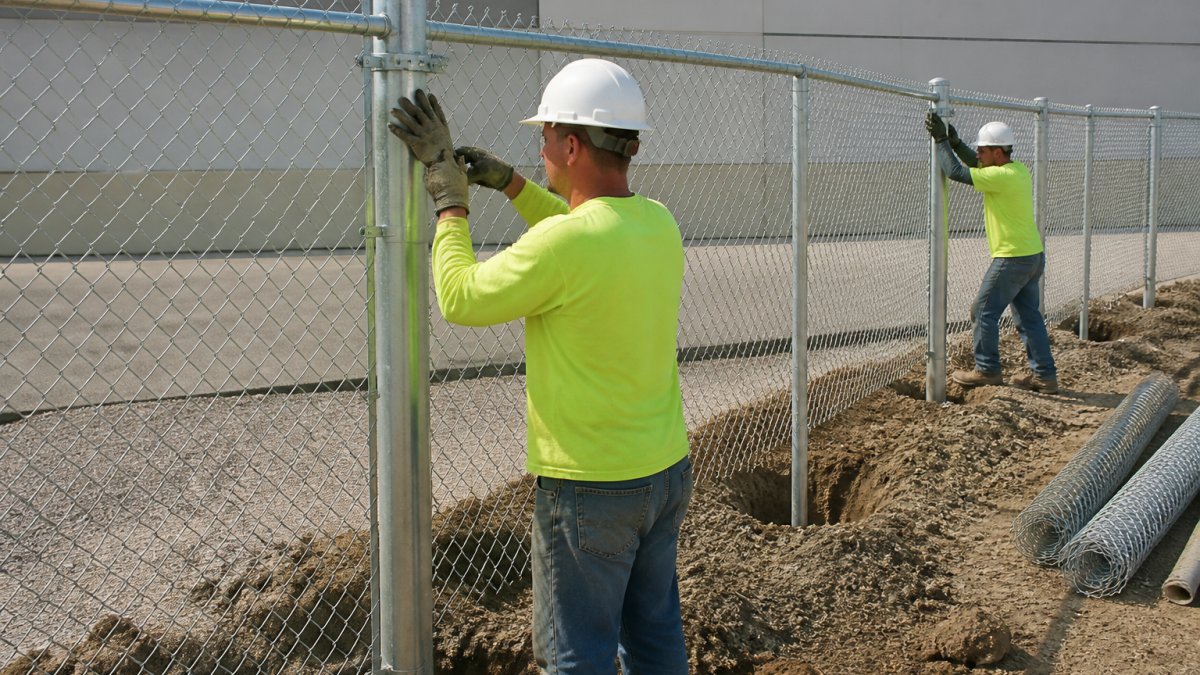
- Post setting and construction. Posts go in first, set to depth and plumb, because every panel depends on them.
- Final walkthrough. We check alignment, gates, hardware, and cleanup with the property manager before we call the job done.
Commercial Fence Installation Cost: What Moves the Number
Commercial fence installation cost depends on several variables, including linear footage, material, terrain, and gate complexity.
Get a Quote →
- Linear footage. More fence means more material, more posts, and more labor hours.
- Material. Steel and custom fabrication generally cost more up front than chain-link.
- Terrain. Slopes, rock, and tight access slow crews down and require engineering.
- Gates and access control. A security gate with an opener adds hardware, wiring, and setup time.
Pricing depends on the specifics of each project. Contact Bradshaw Gates for current pricing or a quote. Ask any contractor how they handle change orders and site surprises before you sign.
Security Fence With Gate: Where Access Control Lives
A security fence with gate is only as strong as its weakest point, and the gate is almost always that point. The fence can be perfect, but if the gate swings open for anyone or the opener fails every few months, the perimeter is decorative.
Gates can be custom-fabricated to suit sloped or uneven terrain. Custom fabrication can address unusual angles and non-standard openings.
Watch out: buying an opener before the gate is designed is a common and expensive mistake. The gate's weight, width, and travel path determine what opener will actually last.
Vetting Your Security Fence Installation Contractor
Choosing the right contractor matters more than choosing the material. Ask every bidder the same questions, and compare the answers side by side.
- Are you licensed and insured for commercial work in this state?
- Can you show commercial references from the past two years?
- How do you handle slope, rock, and utility conflicts?
- Who pulls the permits, and who handles inspections?
- What is the written warranty on posts, panels, and hardware?
- How do you handle change orders and site surprises?
- What is your typical response time for warranty calls?
A contractor who hesitates on permits or warranty terms is telling you something. The FTC's guidance on home improvement contracts is a useful reference for what a written contract should include before you sign.
Request a Commercial Fence Quote From Bradshaw Gates
Getting a commercial perimeter right takes a site visit, a threat assessment, and a crew that sets posts correctly the first time. Bradshaw Gates handles custom steel and wood fabrication, chain-link and vinyl installation, and gate opener diagnostics and repair. Our work emphasizes solid posts, careful alignment, and piece-by-piece quality control, including on difficult terrain.
Get started with Bradshaw Gates and secure your commercial property with a fence built right and built to last.
Frequently Asked Questions
How much does commercial security fence installation cost?
Commercial fence installation cost depends on linear footage, material, terrain, and gate requirements. Chain-link is the least expensive per foot, while steel and ornamental systems cost more because of fabrication and heavier posts. Uneven ground, rock, or long gate spans add labor. Pricing depends on the specifics of each property. Request a quote from Bradshaw Gates for current pricing.
What type of fence is best for commercial property security?
There is no single best type. Chain-link with tension wire and a top rail handles large perimeters at a lower cost. Steel and ornamental fencing add visible deterrence and are harder to climb. Vinyl and wood suit properties where privacy matters more than threat resistance. The right choice depends on what you are protecting, how the site is laid out, and whether the fence needs to pair with a security fence with gate system for controlled entry.
Do commercial security fences need permits?
Permits are usually handled at the local level, and requirements vary by zoning district, fence height, and setback rules. Most commercial projects need a permit before installation begins. Ask upfront who pulls the permit and whether inspection is required, so the project does not stall after posts are set.
How long does it take to install a commercial security fence?
Timeline depends on linear footage, material, terrain, and gate fabrication. A short chain-link run can finish in a few days, while a large steel perimeter with a custom gate may take several weeks, especially if fabrication is involved. Sloped or rocky ground slows post setting. Ask any contractor for a written schedule with milestones, and confirm when materials are ordered.
Get a Quote Add bradshawgates.com as a preferred source on Google →Frequently Asked Questions
How much does commercial security fence installation cost?
Commercial fence installation cost depends on linear footage, material, terrain, and gate requirements. Chain-link is the least expensive per foot, while steel and ornamental systems cost more because of fabrication and heavier posts. Uneven ground, rock, or long gate spans add labor. Pricing depends on the specifics of each property. Request a quote from Bradshaw Gates for current pricing.
What type of fence is best for commercial property security?
There is no single best type. Chain-link with tension wire and a top rail handles large perimeters at a lower cost. Steel and ornamental fencing add visible deterrence and are harder to climb. Vinyl and wood suit properties where privacy matters more than threat resistance. The right choice depends on what you are protecting, how the site is laid out, and whether the fence needs to pair with a security fence with gate system for controlled entry.
Do commercial security fences need permits?
Permits are usually handled at the local level, and requirements vary by zoning district, fence height, and setback rules. Most commercial projects need a permit before installation begins. Ask upfront who pulls the permit and whether inspection is required, so the project does not stall after posts are set.
How long does it take to install a commercial security fence?
Timeline depends on linear footage, material, terrain, and gate fabrication. A short chain-link run can finish in a few days, while a large steel perimeter with a custom gate may take several weeks, especially if fabrication is involved. Sloped or rocky ground slows post setting. Ask any contractor for a written schedule with milestones, and confirm when materials are ordered.
Planning a fence or gate project?
Bradshaw Gates serves Northeast Oklahoma and the Four-State area.
Request a Quote Call 918-325-0057